Menopause is a natural stage of life that can have a significant impact on an individual's health, wellbeing and experience at work. Symptoms such as hot flushes, fatigue, sleep disruption, anxiety, headaches and difficulties with concentration can affect comfort, confidence and, in some cases, the ability to carry out work safely.
Creating an open and supportive working environment helps employees feel comfortable discussing their needs and enables employers to put appropriate measures in place to support their health, safety and wellbeing. Internal Peninsula guidance highlights the importance of recognising menopause as a workplace health and safety consideration and providing appropriate support and reasonable adjustments where required.
Legal Duties
Employers have a duty under the Health and Safety at Work etc. Act 1974 to protect the health, safety and welfare of employees while they are at work. Employers should assess workplace risks and take reasonable steps to reduce any factors that may worsen menopausal symptoms. The Management of Health and Safety at Work Regulations 1999 require employers to identify hazards, assess risks and implement suitable control measures.
Employers should also be mindful of their responsibilities under equality legislation where menopausal symptoms may have a substantial impact on an individual's day-to-day activities. Internal guidance recommends undertaking wellbeing assessments and considering reasonable adjustments to help employees remain safe and comfortable at work.
Control Measures
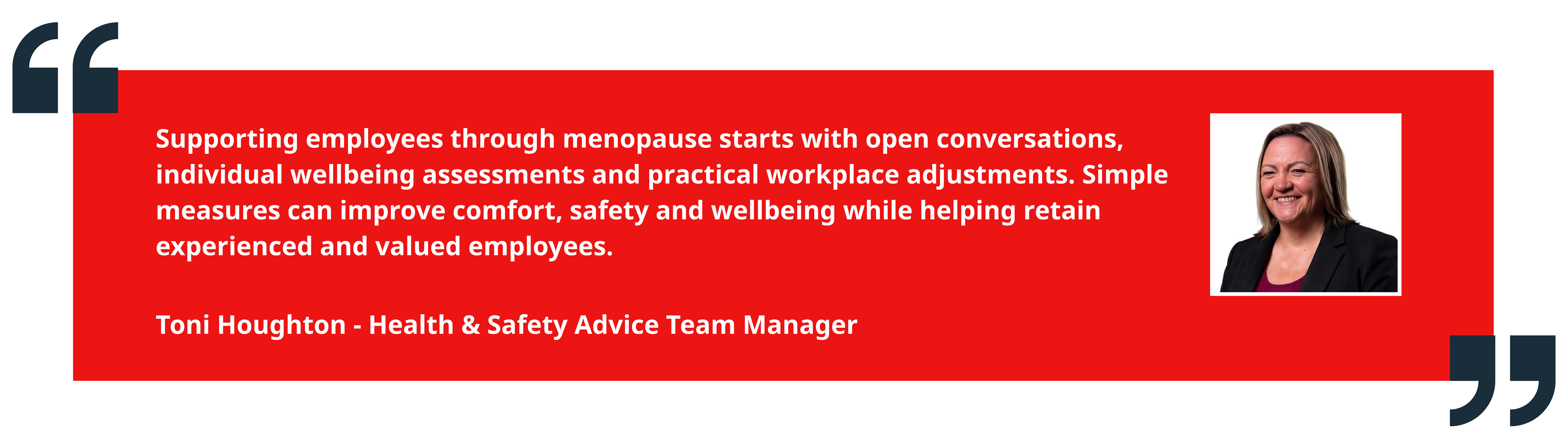
Supporting employees experiencing menopause begins with open, confidential conversations and individual wellbeing assessments. These discussions help identify symptoms that may affect an employee's work and determine what adjustments may be required.
Practical workplace controls may include improving ventilation, providing access to cooling fans, ensuring readily available drinking water, allowing additional access to welfare facilities and providing comfortable rest areas. Flexible working arrangements, adjusted break schedules, temporary task modifications and changes to work patterns may also help employees manage symptoms more effectively.
Employers should ensure managers receive appropriate awareness training so they can handle conversations sensitively, understand the potential impact of menopause and respond consistently. Regular reviews should be carried out to ensure agreed measures remain effective, as symptoms and support needs may change over time
Key Safety Measures
Certain menopause symptoms can affect workplace safety if not properly managed. Fatigue, poor concentration, memory difficulties and "brain fog" may increase the likelihood of mistakes, particularly in safety-critical environments. Where symptoms are severe, consideration should be given to temporarily modifying duties, implementing additional supervision or buddy systems, and carrying out dynamic risk assessments where necessary.
Employers should also ensure workplace conditions do not exacerbate symptoms. Temperature control, suitable ventilation, comfortable workwear and access to welfare facilities can make a significant difference to employee wellbeing. Encouraging an inclusive culture where employees feel comfortable seeking support can help reduce stigma and ensure concerns are addressed before they impact health, safety or performance.
Summary
Menopause is both a wellbeing and workplace health and safety issue that deserves careful consideration. By fostering open communication, carrying out individual wellbeing assessments and implementing practical adjustments, employers can help employees manage symptoms effectively while remaining safe and productive at work.
A supportive approach not only improves wellbeing but also promotes inclusion, aids staff retention and demonstrates a commitment to creating a workplace where everyone is treated with dignity, respect and understanding.