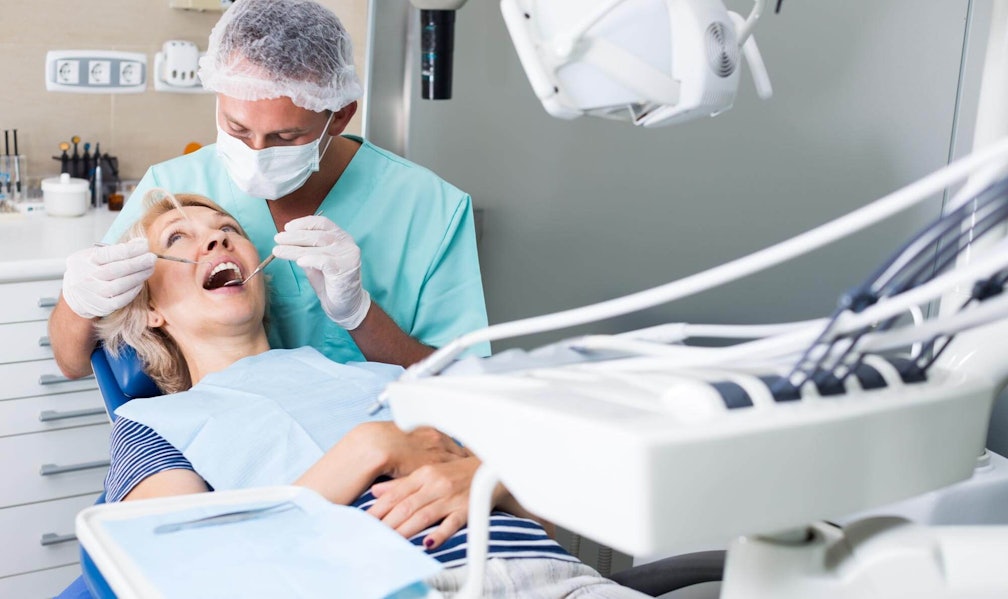
When running a dental surgery, there are many Health & Safety hazards you need to be aware of. You must control these correctly, to keep both your employees and patients safe.
Carrying out a risk assessment is the best way to do this, but it’s also one of your legal duties when it comes to Health & Safety. Failure to perform one could put both your employees and patients at risk of harm.
In this guide, we'll discuss why risk assessments are important, how to carry one out, and how Peninsula can help you. We provide expert dentistry Health & Support for your dental practice, contact us today to find out more.
Find the safest and easiest way to resolve your workplace issue
What is a risk assessment?
Risk assessments are an evaluation of work activities; they consider what could potentially cause harm to people, and whether adequate safety controls are in place.
A risk assessment is a vital tool to help manage Health & Safety in your dental surgery. You can download our free risk assessment template here.
Are risk assessments in dental surgeries a legal requirement?
Yes, under Health & Safety law, risk assessments are a legal requirement in dental surgeries. The Health & Safety at Work Act 1974 states that employers must control risks that employees are exposed to and others who may be affected.
Specifically, under the Management of Health and Safety at Work Regulations 1999, employers are required to assess the risks in the workplace.
Other legislations that are related to the management of Health & Safety in dentistry are:
Control of Substances Hazardous to Health Regulations (COSHH).
Manual Handling Operations Regulations 1992.
Regulatory Reform (Fire Safety) Order 2005.
Why is a risk assessment important in a dental practice?
Risk assessments are vitally important in a dental practice. As a business owner, you are responsible for keeping your employees and patients safe whilst on site.
Carrying out a risk assessment is the best way to spot and control hazards that may occur within a dental surgery setting.
Hazards in a dental practice
There are many potential hazards in a dental practice, such as needles and other dental equipment. But there are others you need to be aware of, all of which can be avoided with a proper risk assessment.
This includes:
Exposure to hazardous substances, such as cleaning agents.
Burns or skin damage from using a hazardous chemical, such as mercury.
Incorrect storage of hazardous substances.
Incorrect biological waste disposal.
Incorrect infection control - which could lead to viral infections.
Poor medicine storage.
Radiation exposure.
How to carry out risk assessments
A risk assessment should be carried out if you're introducing a new process, changing a process, or using new equipment or materials that can present risk. They should be carried out by a competent person - such as the employer, a trained employee, or a Health & Safety professional.
Below are the steps to follow when conducting Health & Safety risk assessments:
Step 1: Identify hazards
The first step of the process is to correctly identify potential hazards found in the workplace. You must think about risks linked to materials, equipment, and current work practices. This should be done via a site walkaround.
You should be able to identify hazards and risks as separate entities. Hazards have the potential to cause harm, whilst risks can cause harm or damage to other parties.
Step 2: Decide who may be harmed
The second step of a risk assessment is to evaluate which people can be harmed by hazards and how.
Remember to consider the potential harm to any non-workers you have in your surgery, for example, patients. Under your legal duty of care, you must assess the risks to them. You'll be held responsible if they are harmed whilst visiting your surgery.
Step 3: Evaluate the extent of the risk and implement control measures
The third step of the risk assessment process is to evaluate the risks found, in terms of low, medium, and high. You should evaluate the extent of the risk by determining several factors, such as:
What the risk is.
The likelihood of harm being caused by the risk.
The number of people affected.
The possible consequences.
Following this, you should implement control measures that best protect your employees and patients from harm.
For example, the requirement for the use of personal protective equipment (PPE) like eye protection when carrying out certain tasks. Or providing employees with sharps awareness training to reduce the risk of needle stick injuries.
Step 4: Record your findings
The next step of the process is to record the findings of the risk assessment. This record should include identification of hazards and any measurement you implement.
If you have five or more workers, you have a legal requirement to have risk assessments written down within a Health & Safety policy.
However, it is best practice to document risk assessments, regardless of business size.
Step 5: Review your risk assessment and update as needed
The last step of the process is to determine when to review your risk assessment. This should be done as a minimum annually. However a review could be prompted by changes to a work process, or any changes to the materials or equipment used within your dental surgery.
How Peninsula can help with Health & Safety risk assessments
There are thousands of dental surgeries within the UK, with millions of people visiting the dentist each year. This is why you need to be aware of the relevant Health & Safety rules and regulations.
But, when running a dental practice, this can take up valuable time - and every minute counts. That's why Peninsula is here to help. We can help with every aspect of your Health & Safety management. Including:
Full documentation service.
Our teams offer expert advice on dentist Health & Safety and risk assessments. We provide 24/7 Health & Safety advice which is available 365 days a year. We take care of everything when you work with our Health & Safety experts.
Download our free risk assessment template today, which is ready to use when required.
Want to find out more? Contact us on 0800 028 2420 and book a free consultation with a Health & Safety consultant today.
Get instant, expert answers to all your HR and health & safety questions